Ahmed Al Omran and Ellen Knickmeyer Zawya report in the 12/22/13 Gulf News. A link to the story is here, and the text is below.

Women activists are now driving weekly and documenting their confrontations with law enforcement on social media to increase pressure on the conservative country and keep the issue in the public eye.
The campaigners are also trying to discern subtle but mixed signals from the secretive government for encouragement that change may be afoot.
They said authorities have used different tactics with different drivers, creating some uncertainty over where the government stands.
“I kind of feel that the government wants us to drive, but at the same time it doesn’t want to make it official yet because it doesn’t want to face the religious establishment,” said Tamador Alyami.
She spoke by phone after riding in the passenger seat with another woman driving in the coastal city of Jeddah on December 12. Alyami said she planned to drive on December 28 and does not think the government will take drastic measures to stop her.
“I think they got the message,” she said.
Activist says the government does not want to face the religious establishment on women’s driving
- Image Credit: AP
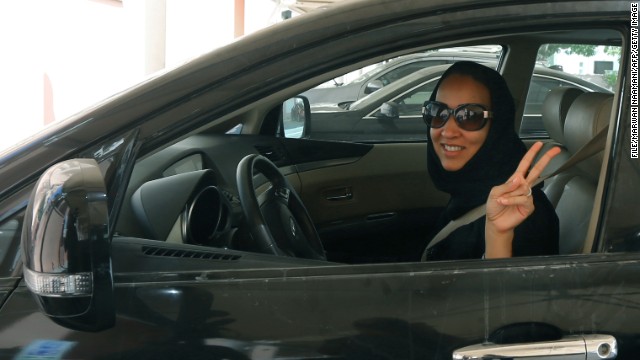
- A file picture of a Saudi woman driving a vehicle in Riyadh
Dubai/Riyadh: The campaign against Saudi Arabia’s ban on women driving
has shifted tactics to increasingly challenge the law ahead of a new
nationwide day of defiance on December 28.
Women activists are now driving weekly and documenting their confrontations with law enforcement on social media to increase pressure on the conservative country and keep the issue in the public eye.
The campaigners are also trying to discern subtle but mixed signals from the secretive government for encouragement that change may be afoot.
They said authorities have used different tactics with different drivers, creating some uncertainty over where the government stands.
“I kind of feel that the government wants us to drive, but at the same time it doesn’t want to make it official yet because it doesn’t want to face the religious establishment,” said Tamador Alyami.
She spoke by phone after riding in the passenger seat with another woman driving in the coastal city of Jeddah on December 12. Alyami said she planned to drive on December 28 and does not think the government will take drastic measures to stop her.
“I think they got the message,” she said.
In a video of her December 12 drive posted on YouTube, the two women chatted nervously, scanning for police cars that soon converged upon them. The sound of Talal Maddah, a late Saudi singer, came from the car stereo: “My beloved country, you are the land of pride and a beacon of shining light.” Seven police patrols surrounded the car, stopped it, then towed it away. Authorities had the women sign a pledge not to drive again and released them.
A day earlier, two other women drove for half an hour in the capital Riyadh, before police stopped them. They were held in the police station for 10 hours until they and their male guardians signed similar pledges. But their car was not towed.
While Saudi police continue to stop those who defy the ban, no woman has been jailed for driving since 2011.
When activists announced a first driving day on October 26 in the revived campaign, the Interior Ministry came out with a strongly worded statement saying women aren’t allowed to drive in Saudi Arabia.
Authorities detained a man who wrote in support of women driving, but
have stopped short of more politically sensitive arrests of female
drivers.
With no hint of a change, women drivers and their supporters make weekly visits to the Shoura advisory council, the royal court, and cabinet ministers with petitions and reports.
In one key meeting, women’s rights activist Hala al Dosari and another activist managed to book a meeting with powerful Interior Minister Prince Mohammad Bin Nayef. They were in the same complex, but met by video conference - standard practice for ministry meetings with females.
The prince told the women that a decision was not in his hands - something they had heard before from other Saudi officials, Dosari said.
The prince assured them the driving ban “was on the table” with the proper authorities, she said, adding this was the same answer Saudis pushing for change always get.
“Just a vague response to keep us satisfied,” she said.
The ministry didn’t respond to requests to comment.
But even the religious establishment appears split. Shaikh Abdul Latif Al Shaikh, head of the feared religious police, said in September that Islamic law doesn’t have a text forbidding women from driving. The country’s grand mufti, Shaikh Abdul Aziz Al Shaikh, said last month, however, that the ban protects society from “evil”.
More than 22 years have passed since Saudi women first demanded the right to drive. Nevertheless, some remain upbeat that change could come soon. But change in the kingdom comes from the top down.
King Abdullah bin Abdul Aziz Al Saud, often seen as a cautious
reformer, announced in 2011 that women will be allowed to vote and run
in local elections, and this past February, he appointed the first 30
women to the advisory Shoura Council. The nonagenarian monarch told
American journalist Barbara Walters in 2005 that it will be possible to
lift the ban on women driving.
But he said the “issue will require patience”.